
Beginner / Foundational

Research Methodology — Foundational Course

Learn how to think, plan, and write like a beginner researcher

A practical 5-week beginner programme on live Zoom sessions. Build research thinking step by step and prepare a final mini research proposal in a free foundational cohort.

Level

Beginner / Foundational

Duration

5 Weeks

Sessions

10 live sessions

Schedule

Fri and Sat

Time

4:00 PM PKT

Class Duration

Approx. 60 minutes

Mode

Live online / Zoom

Fee

Free foundational cohort

Course Introduction

The Research Methodology — Foundational Course is a practical beginner-level programme designed to help learners understand what research is, how evidence works, and how to develop a small but coherent research proposal. The course introduces the research process step by step, from choosing a topic to preparing a final mini proposal.

Course Overview

Course Title
Research Methodology — Foundational Course
Level
Beginner / Foundational
Duration
5 weeks
Total Sessions
10 live sessions
Schedule
Friday and Saturday
Time
4:00 PM PKT
Class Duration
Approximately 60 minutes
Mode
Live online
Medium
Zoom
Main Output
Final mini research proposal
Fee
Free foundational cohort

Course Objective

The objective of this course is to help students develop the basic skills needed to understand, evaluate, and plan research. Students learn how to move from a broad interest to a focused research topic, use evidence responsibly, choose a suitable method, and prepare a clear mini research proposal.

Who This Course Is For

  • Students who want to learn the basics of research methodology.
  • Teachers, doctors, professionals, homemakers, and returning learners who want a structured introduction to research.
  • Learners from Islamic studies, education, health, technology, humanities, science, social sciences, or community work.
  • Urdu and English-speaking learners who may not yet feel confident in formal academic writing.
  • Anyone who wants to move beyond opinion, forwarded claims, or copy-paste learning into careful research thinking.

What Students Will Learn

  • How research differs from opinion, information, evidence, and argument.
  • How to choose, narrow, and justify a research topic.
  • How to write a problem statement, aim, objectives, and research questions.
  • How to search for credible sources and use them responsibly.
  • How to write a short beginner literature review.
  • How to choose a suitable research approach and data collection method.
  • How to consider sampling, bias, validity, reliability, ethics, and limitations.
  • How to organise a simple analysis plan and prepare a final mini proposal.

How the Course Works

This is a practical course. Each session introduces one part of the research process and helps students gradually build their final mini proposal. The teaching style uses simple explanation, guided examples, practical writing, and feedback. Students are encouraged to write clearly and honestly instead of trying to sound unnecessarily complicated.

Full Curriculum

5 weeks, 10 live sessions, building toward a final mini research proposal

Lecture 1: Orientation, Research Culture, and What Research Means

This opening session introduces the course structure and the basic meaning of research. Students learn that research is disciplined inquiry, not just collecting information, forwarding claims, or copying from online sources.

Lecture 2: Finding and Narrowing a Research Topic

This session helps students move from a broad area of interest to a focused and manageable research topic. The emphasis is on choosing a topic that is clear, realistic, ethical, and possible to complete within the course.

Final Mini Proposal

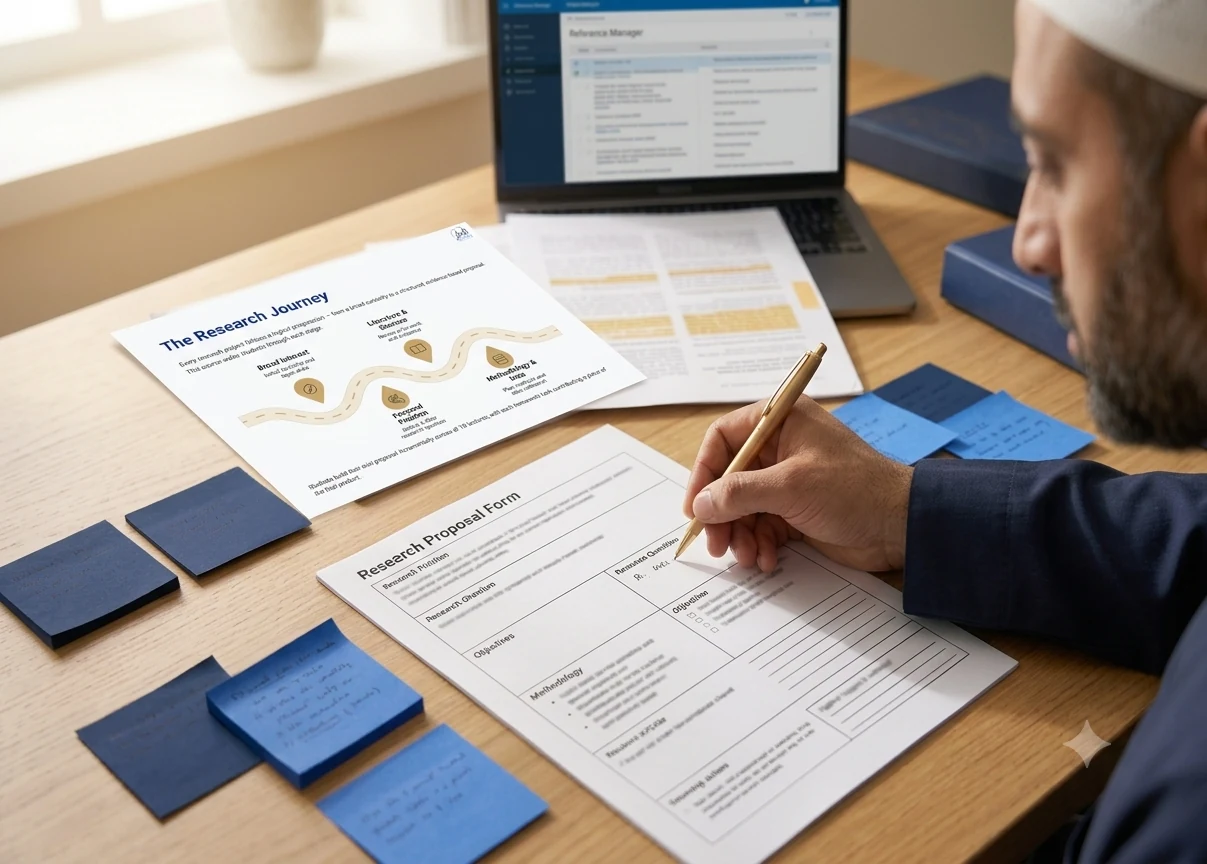
The final output of the course is a mini research proposal. It is not a full thesis, but it introduces students to the main components of academic research planning.

  • Focused research topic and background
  • Problem statement, aim, objectives, and research questions
  • Brief literature review and key references
  • Research approach, data collection method, and sampling plan
  • Ethics, limitations, and basic analysis plan

Student Expectations

  • Attend live sessions regularly.
  • Participate through chat, voice, or class activities where possible.
  • Keep one research notebook, Google Doc, or MS Word file for course work.
  • Complete short weekly writing tasks.
  • Use sources honestly and cite them properly.
  • Revise work based on feedback.

Course Outcome

By the end of the course, students will have practised the full beginner research process and produced a structured mini proposal that can support future academic, professional, or community-based research.

Start your research journey with a structured, beginner-friendly course

Learn how to ask better questions, evaluate evidence, and build a mini research proposal step by step.